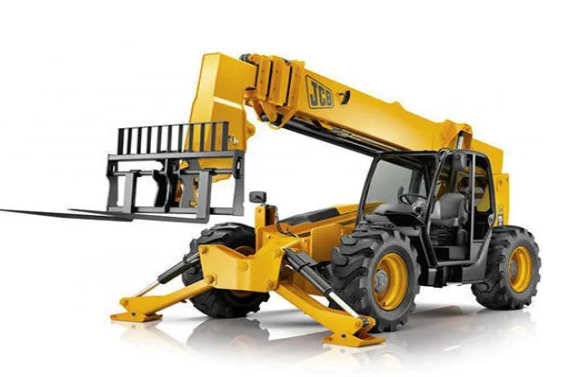
Australian worksites have a way of exposing bad equipment decisions faster than any inspection ever could. A telehandler that looked reasonable on paper starts revealing itself the moment ground conditions shift, a critical attachment does not fit, or the nearest service technician is a four-hour drive away. The market for telehandler for sale listings is wide, and the variation in quality, suitability, and long-term reliability is wider still. Understanding what actually separates a sound purchase from an expensive mistake is what most buying guides quietly avoid.
Rated Capacity Is Not the Whole Story
Every telehandler carries a rated lift capacity, but that figure applies at a specific load centre under specific conditions. Move the load further forward on the forks, work on an uneven surface, or push toward the outer edge of the boom’s reach, and that rated capacity shrinks — sometimes dramatically. Dealers rarely volunteer this information upfront. Buyers who understand load charts and ask to see them before committing are operating in a different league from those who take the headline specification at face value and discover the gap on site.
Attachment Compatibility Gets Overlooked
The attachment question trips up more buyers than almost anything else. A telehandler purchased without verifying hydraulic flow rates, coupler compatibility, and auxiliary circuit availability can arrive on site unable to run half the attachments the operation depends on. Retrofitting hydraulic circuits after delivery is possible but adds complication and cost that should never have been necessary. Before any purchase conversation progresses seriously, the full attachment list the operation needs should be sitting on the table alongside the machine specifications.
Terrain Decides More Than Buyers Realise
A telehandler that performs beautifully on a compacted hardstand becomes a liability on the soft, waterlogged ground that follows three days of rain on a rural property. Tyre compound, axle oscillation range, and ground clearance interact in ways that only become obvious when conditions deteriorate. Agricultural buyers in particular tend to discover this after the fact. The smarter approach is to describe the worst ground conditions the machine will ever encounter — not the average ones — and select accordingly from there.
Service Distance Is an Operational Risk
Metropolitan buyers rarely think about this. Regional and remote operators cannot afford to ignore it. When a telehandler for sale is evaluated purely on machine specification without any consideration of where the nearest authorised service dealer sits, the buyer is accepting a risk they have not fully priced. A hydraulic fault that sidelines a machine during harvest, or mid-pour on a concrete structure, does not wait for a technician to drive from three towns away. Parts availability at the local level matters just as much as the brand name on the boom.
Used Machines Require a Different Lens
Hour metre readings attract attention, but they mislead as often as they inform. A machine with modest hours that spent its life on abrasive sandy soil, lifting at maximum capacity repeatedly, can be far more worn than a higher-hour machine used gently on soft ground with varied loads. Boom wear, slew bearing condition, hydraulic cylinder seal integrity, and the state of the carriage rollers tell the real story. Buyers who bring an independent inspector to a used telehandler for sale viewing consistently make better decisions than those who rely on the seller’s service summary alone.
Cab Environment Affects Real-World Performance
Operator fatigue is an underappreciated source of worksite error. A telehandler with poor forward visibility, a vibration-heavy seat, or a cab that becomes unbearable by midday in Australian summer conditions does not just create discomfort — it creates inaccuracy. Loads get placed less precisely, movements get rushed, and risk tolerance quietly shifts in the wrong direction. The cab environment deserves genuine scrutiny during any demonstration, not a cursory glance before the conversation returns to lift specs.
Resale Is Shaped at Purchase
The decisions made at the point of purchase — brand selection, attachment fit, maintenance commitment, documentation discipline — directly determine what the machine is worth when it eventually leaves the fleet. Buyers who think about the exit before they sign consistently recover more at resale than those who treat that as a future problem.
Conclusion
The telehandler for sale market rewards buyers who ask uncomfortable questions before committing, not after. Capacity charts, attachment compatibility, terrain suitability, service proximity, and cab ergonomics are not minor details — they are the factors that determine whether the machine genuinely serves the operation or quietly creates friction every working day. Australian conditions are demanding enough without adding an ill-matched machine to the pressure. The right purchase makes that pressure manageable. The wrong one compounds it in ways that take years to fully resolve.