Nobody talks about expansion joints until a car park deck starts leaking through the slab or a tiled floor cracks along a line nobody can explain. By that point, the remedial work is disruptive, expensive, and entirely avoidable. The truth is that most joint failures in Malaysian buildings are not material failures — they are decision failures, starting from the moment someone picked the wrong expansion joint supplier in Malaysia for the job.
The Tropical Degradation Nobody Warns You About
Standard neoprene compression seals are widely used across Southeast Asia, but they carry a problem that most product sheets gloss over. In Malaysia’s combination of sustained heat and near-constant humidity, neoprene hardens significantly faster than it does in cooler climates. A seal that might remain flexible and functional for well over a decade in northern Europe can lose meaningful elasticity in a fraction of that time here. Once a seal hardens, it stops accommodating movement. It no longer seals; it just sits there, looking intact, while water finds its way through. Knowing this changes how a good supplier specifies from the outset.
Why Joint Width Calculations Get Fudged
Movement gap calculations should be done per structure, accounting for the actual thermal range the material will experience, the span between joints, and the structural system in use. In practice, many projects in Malaysia use rule-of-thumb widths pulled from previous jobs or generic guides. The result is joints that are either too narrow — which means the seal is constantly being compressed beyond its designed limit — or too wide, which causes sealant to bridge incorrectly and tear under cycling. An expansion joint supplier in Malaysia worth working with will push back on under-specified widths at the design stage, not simply supply whatever width the drawing shows.
The Handover Problem Nobody Discusses
There is a moment on almost every Malaysian construction project when finishing trades move in before joint installation is properly complete. Floor tilers, screed layers, and waterproofing applicators all have deadlines, and expansion joints sit awkwardly across trade boundaries — they are not quite structural and not quite finishing. This is when joint continuity gets broken. A carefully specified joint system along a floor-to-wall junction gets interrupted because the tiler filled the gap to make the finish look cleaner. The structural movement still happens. The joint no longer accommodates it. Remedial cutting through finished floors follows months later.
Aluminium Versus Stainless — the Trade-Off Most Skip
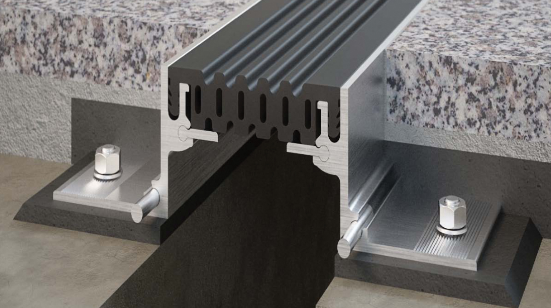
In high-humidity internal environments – basement car parks, covered walkways, plant rooms – aluminium cover plates corrode at their fixings long before the seal beneath fails. The joint looks fine visually, but has lost its secure anchorage. Stainless steel performs considerably better in these conditions, though it carries different constraints around thermal expansion of the cover plate itself. A reputable expansion joint supplier in Malaysia should be raising this conversation with the project team during specification, particularly for below-grade or poorly ventilated applications where aluminium’s long-term performance is genuinely questionable.
When the Supplier Disappears Post-Delivery
One pattern that recurs across Malaysian construction projects is the supplier who is attentive during the sales process and unreachable once the product is on site. Installation queries go unanswered. Substitutions get made by contractors who cannot get technical guidance. Joint terminations at columns and doorframes — the genuinely difficult details — get improvised. The resulting failures are then attributed to the product rather than the installation, which suits everyone except the building owner. Before committing to a supplier, it is worth asking directly who provides on-site support and what that actually looks like in practice. The answer is telling.
Conclusion
The details that cause joint failures in Malaysian buildings are not mysterious — they are specific, repeatable, and largely preventable. Material selection that ignores tropical degradation rates, joint widths taken from templates rather than calculations, finishing trade conflicts, wrong metal choices for humid environments, and post-delivery abandonment by suppliers all contribute to outcomes that end up costing far more to fix than to get right. Working with a knowledgeable expansion joint supplier in Malaysia who stays involved from specification through to installation is not a premium — it is simply the difference between a joint that works and one that eventually does not.