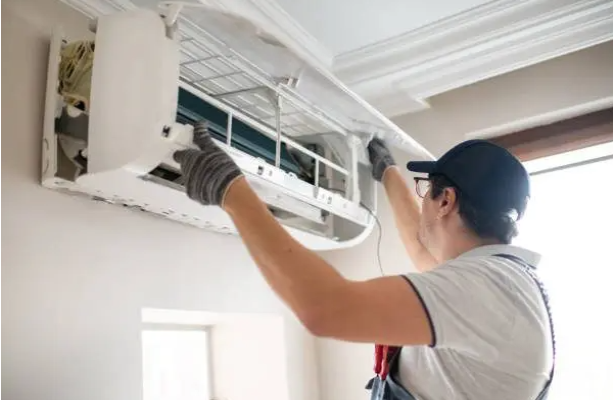
There’s a conversation that happens repeatedly between Northern Beaches technicians and homeowners — and it almost always starts with “it was working fine last summer.” Air conditioning systems don’t fail randomly. They fail predictably, along patterns that experienced technicians recognise immediately, and almost every failure has a history of ignored warning signs and skipped services behind it. Later always arrives on the hottest day of the year. Regular air conditioning service in northern beaches exists specifically to interrupt that pattern before it plays out the hard way.
Salt Air Does Specific Damage
This isn’t a general warning about coastal environments. Sodium chloride particles carried in sea air are hygroscopic — they attract and hold moisture against metal surfaces. On aluminium condenser fins, this creates a corrosion process that reduces heat exchange efficiency long before any visible damage appears. On electrical terminals and contactor surfaces, the same moisture retention causes resistance to build in connections that are supposed to carry current cleanly. Systems close to the shoreline experience this at a rate that genuinely surprises homeowners who’ve moved from inland areas. Servicing here means inspecting for these specific damage patterns — not running through a generic checklist that was written for a different climate entirely.
Efficiency Loss Is Invisible Until It Isn’t
A system losing efficiency doesn’t announce itself. It just runs longer cycles to reach the same setpoint. The compressor works harder. The fan moves air through a progressively more restricted filter. Electricity consumption climbs while comfort quietly drops. Most homeowners don’t track cycle times or compare this summer’s performance to last summer’s — they just feel vaguely that the system isn’t keeping up, then assume it’s a particularly hot day. Air conditioning service in northern beaches performed by technicians who understand these degradation patterns can quantify what the system has lost and restore it, rather than simply confirming it’s still technically operational.
Drainage Problems in Humid Conditions
The Northern Beaches humidity creates conditions inside evaporator drain trays that inland systems simply don’t experience at the same rate. Standing condensate in a warm, humid environment grows biological matter quickly — algae, mould, and bacterial films that block drain outlets and back moisture up into the unit. When that happens, the system either triggers a safety float switch and shuts down, or — if the float switch has failed — allows water to overflow into ceiling cavities or wall spaces. A service that includes proper drain cleaning and float switch testing isn’t optional caution. In this climate, it’s the difference between a functioning system and a water damage insurance claim.
What Refrigerant Loss Actually Means
Refrigerant doesn’t deplete through normal use. It only leaves the system through leaks. A system running low has a leak somewhere, and that leak will worsen over time. More importantly, a system operating below its correct refrigerant charge makes the compressor work outside its designed operating envelope — running hotter, under greater mechanical stress, for longer periods to achieve diminishing results. Air conditioning service that includes refrigerant pressure testing identifies this early. Recharging without finding and fixing the leak is a temporary measure that delays an expensive outcome rather than preventing one.
Why Timing the Service Matters
Late winter servicing exists for a specific reason — it finds problems while parts are available, technicians are bookable, and time exists to fix things properly. A failed capacitor in spring is a same-week repair. The same capacitor failing mid-January means days without cooling while every technician across the Northern Beaches works through a backlog of emergency calls. The discomfort is avoidable. Most people just don’t connect the timing of the service to the timing of the outcome until they’ve lived through the alternative once.
What Sounds Are Telling You
Rattling on startup usually means a loose panel or fan blade with minor imbalance. Intermittent squealing points toward bearing wear in the fan motor. Clicking that persists beyond normal startup indicates a contactor or relay struggling to seat properly. None of these fix themselves, and none of them get quieter over time. They get louder, then they stop making noise altogether — which is always the more expensive version of the problem.
Conclusion
Northern Beaches air conditioning systems operate in conditions that genuinely accelerate wear — salt air corrosion, high humidity, heavy summer loads, and continuous operation that stresses components on a timeline that moderate climates don’t replicate. Professional air conditioning service in northern beaches addresses these specific conditions methodically, before small problems become expensive ones. For homeowners who understand what the local climate actually does to mechanical systems, regular servicing isn’t maintenance for its own sake. It’s simply the most practical way to protect equipment that the Northern Beaches climate works hard to degrade.