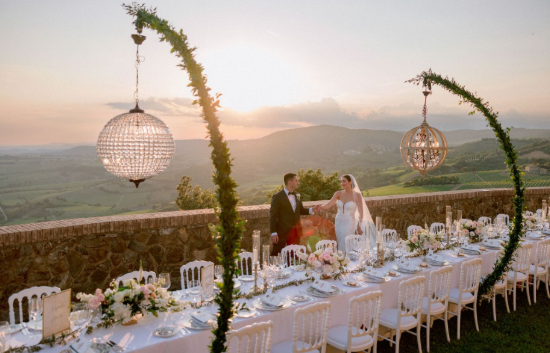
Ask any couple who has already married in Tuscany what surprised them most and very few mention the landscape. They mention how the day felt. Unhurried. Like the venue had done this a thousand times and was completely unbothered. Tuscany wedding venues carry a kind of institutional calm that is hard to manufacture — partly because many of them have, in fact, been doing this for generations. The hills look the way they do in every photograph. That part is not the surprise. What catches people off guard is everything else running quietly underneath it.
The Staffing Secret Nobody Talks About
Most event venues around the world run on contracted weekend staff. People who showed up Friday, will be gone by Sunday, and genuinely could not pick the couple out of a crowd a week later. Tuscany works differently — at least the good ones do. A lot of the historic estate properties are still operated by the same families who built them up, and the person who walks you through the olive grove during your site visit is quite likely the same person managing the generator when a fuse blows during speeches. That matters more than people realise. There is no chain of communication to slow things down. Someone with actual authority is always nearby, and they have a personal stake in the day going well. That is a very different staffing model from most.
Rustic Means Something Different Here
The wedding industry has mostly hollowed out the word rustic. It has come to mean exposed timber beams screwed onto a converted shed. In Tuscany the word earns itself back. Those stone walls are original. Not styled to look original — actually original, from a time before the country around them had a name. The thick floors of a Chianti farmhouse stay genuinely cool in summer not because of any clever architecture but because the people who laid them understood the climate from lived experience. Couples who arrive expecting a boutique hotel dressed up in old clothes sometimes struggle to settle into it. The ones who come in understanding they are guests in a real place — not a set — tend to love it far more.
Autumn Is Honestly the Better Choice
Every general travel guide pushes summer. Peak season, golden weather, long evenings. And yes, the evenings are beautiful. But inland Tuscany in summer is also genuinely hot in a way that does not photograph. Florals go limp faster. Guests in formal wear start looking for shade well before dinner. The reception moves indoors earlier than anyone planned. Autumn — from the tail end of September through to mid-November — is a different story entirely. The grape and olive harvests are running, the landscape looks like it has been painted from memory, the air is cool enough that nobody is checking how much longer they have to stand in direct sun, and the light in the late afternoon is something photographers chase specifically. Most of the couples who have done their research end up choosing autumn. The ones who did not always say they wish they had.
The Food is Not a Selling Point — It Is a System
There is a tendency in wedding marketing to frame local food as a premium add-on. In Tuscany it is just how the supply chain has always worked. The norcineria supplying the cured meats might be a twenty-minute drive away. The estate wine is often literally made on the property. The bread could easily have come from a baker who has been delivering to the venue kitchen since before the current coordinators were hired. None of this is curated for the couple — it is just the regional economy functioning normally. What it means in practice is that the food is coherent in a way that catered wedding food rarely is. It tastes like it belongs where it is being served. And when a guest flags a dietary issue on the day, the kitchen can usually adapt without much fuss, because they are working with actual ingredients rather than pre-portioned packages.
Conclusion
The appeal of Tuscany wedding venues runs much deeper than the standard pitch suggests. Family ownership, a genuinely local food culture, the permit complexity that catches out the unprepared, the quiet argument for autumn over summer, the cultural pace of an Italian reception — these are the things that shape how the day actually feels. Couples who come in understanding the region on its own terms tend to stop trying to manage it and start enjoying it. And the weddings that come out of that approach tend to be the ones people are still talking about years later.