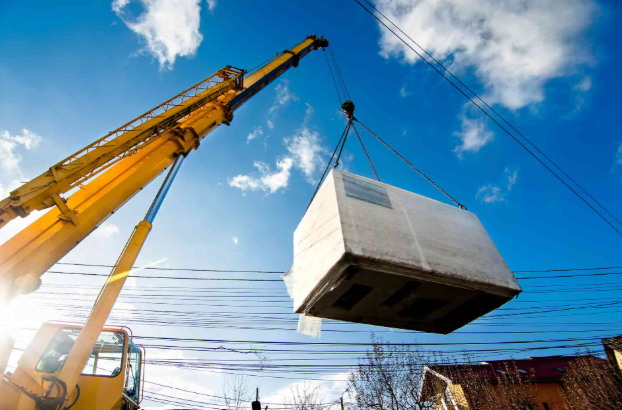
There is a moment on almost every Sydney construction site where something unplanned happens. A structural element arrives late, wind conditions shift, or a lift needs rescheduling at short notice. How quickly that moment gets resolved has very little to do with the original project schedule. It has almost everything to do with who supplied the crane. Local crane hire in Sydney is not simply a procurement decision — it is an operational one, and the difference between getting it right and getting it wrong shows up long before the first lift takes place.
Sydney Sites Are Genuinely Difficult
Most cities have complicated construction environments. Sydney has its own particular version. Sandstone substrates, unpredictable harbour wind patterns, heritage overlays in suburbs like Newtown and Paddington, council permit conditions that vary street street — these are not abstract considerations. They are the daily reality of working here. An operator who has spent years navigating these conditions carries a kind of practical intelligence that cannot be learned from a site plan. That intelligence is what genuine local hire actually delivers, quietly, on every single job.
Mobilisation Speed Has Real Consequences
A crane sitting idle is not just an inconvenience. It is a disruption that ripples through the entire programme — subcontractors waiting, trades unable to proceed, deadlines quietly shifting further away. When a hire company operates locally, the logistics of getting equipment to site, resolving mechanical issues, or swapping out an underperforming machine become significantly more manageable. The depot is near. The team is reachable without chasing time zones or call centres. Decisions get made faster, simply because the people making them are not coordinating across distance.
Operators Carry More Than a Licence
Local crane hire in Sydney done properly means the operator arriving on site has likely worked in that postcode before. They know where ground conditions tend to run soft, which streets require traffic management that councils will realistically approve, and how to position a machine on a constrained urban block without burning half a morning on trial and error. That familiarity does not appear on any capability statement. But it shapes every working hour once the equipment is actually on the ground and the job is live.
Compliance Is Not a Checkbox
SafeWork NSW requirements around crane operations are detailed and actively enforced. Licencing categories, load assessment documentation, exclusion zones, and pre-operational inspections — all of these carry specific obligations that shift periodically. The risk of engaging an operator who is not fully current is not theoretical. It is the kind of risk that shuts sites down mid-project. Established local operators who work consistently within the Sydney market tend to treat compliance as a baseline rather than a burden. Their reputation within that market depends on it, and they know it.
Equipment Matching Is a Skill
There is a persistent assumption that crane selection is relatively straightforward. Bigger sites need bigger cranes; smaller sites need smaller ones. In practice, local crane hire providers who genuinely know Sydney understand that the relationship between site conditions and machine selection is far more nuanced than that. A configuration that works perfectly on a Parramatta warehouse project can be entirely wrong for a terrace demolition in Balmain. Getting that match right from the outset avoids costly repositioning, wasted mobilisation, and the kind of reactive problem-solving that derails programmes quietly and expensively.
Reputation Travels Fast Here
Sydney’s construction industry is large but surprisingly well-connected. Project managers, site supervisors, and principal contractors move between companies and share experiences openly. A hire operator who cuts corners on one job will find that reputation following them into the next tender conversation. That accountability shapes behaviour in ways formal contracts sometimes cannot. Local companies carry their track record into every new engagement. There is a genuine incentive to perform consistently rather than just adequately, because the people watching are the same people who will be making the next hiring decision.
Conclusion
Choosing local crane hire in Sydney well means looking past simple equipment availability and asking harder questions. Questions about site experience, compliance culture, mobilisation capacity, and the accumulated local knowledge that only comes from working here consistently. Sydney rewards that kind of diligence. Projects that invest in the right operational partnerships from the start tend to move differently — more steadily, more predictably — compared to those that treat crane hire as a last-minute arrangement. Once that difference is experienced firsthand, it is genuinely difficult to go back.