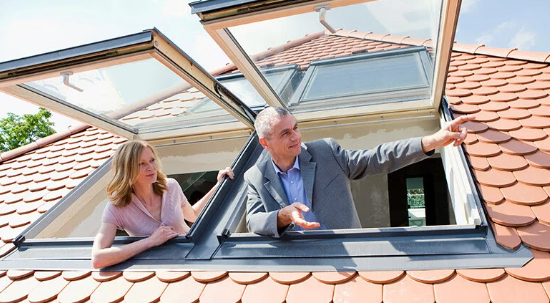
Most people don’t realise that roof skylights can completely reshape how a home functions throughout the day. It’s not just about adding light. It’s about changing the relationship between your indoor and outdoor environments. The difference becomes obvious on a winter afternoon when homes without skylights start feeling dim and closed-in, whilst skylit spaces maintain their brightness for hours longer. This shift affects everything from how much time families spend in certain rooms to how often they reach for light switches.
Natural Illumination
Skylight illumination moves throughout the day. That’s what makes it different from window light. The light traces patterns across your walls and floors that shift with the seasons. Summer sun sits high, so the light pools directly beneath the skylight. Winter brings lower angles. Those same rays stretch further across the room. This creates spaces that feel alive rather than static.
The other advantage often gets missed. Skylight illumination reduces the harsh shadows that side windows create. Light from above wraps around objects. It doesn’t create that stark contrast between the window side and the dark side of a room. Everything feels more balanced.
Energy Efficiency
The energy story with roof skylights goes beyond the obvious daytime lighting savings. Australian climates work particularly well with skylights. Southern states benefit from winter sun through north-facing installations. The warmth can genuinely heat a space without touching the thermostat. Glazing technology makes the real difference here. Double glazing with low-E coatings lets light through whilst blocking most heat transfer.
This matters more than most installers let on. A poorly specified skylight in Brisbane will turn a room into an oven. The right one in Melbourne can actually reduce heating costs during cold months. Climate matching is everything.
Health and Wellbeing
The connection between skylights and sleep quality doesn’t get enough attention. Your body’s internal clock relies on detecting the change from bright light to darkness. Side windows often don’t provide enough light intensity to properly set this rhythm. Rooms facing away from direct sun struggle even more. Skylights deliver overhead light that properly signals daytime to your brain.
People who work from home notice this immediately. Rooms with skylights make it easier to stay alert during the day. Winding down at night becomes more natural. There’s also something about seeing the sky that matters psychologically. Even just patches of blue or passing clouds make a difference.
Visual Space Enhancement
Skylights change how you perceive ceiling height in surprising ways. A room with a standard ceiling suddenly doesn’t feel low when there’s a light source above. Your eye naturally follows the light upward. That psychological lift makes the space feel more generous. This works especially well in renovated Queenslanders. Other homes where ceiling height can’t be physically changed benefit too.
Strategic placement matters enormously. A skylight positioned over a stairwell turns what’s usually a dim, forgotten space into a feature. Visitors notice immediately. The transformation is dramatic.
Privacy Without Compromise
Urban blocks in Sydney, Melbourne, and Brisbane keep getting smaller. This makes the privacy advantage of skylights increasingly relevant. You can have a bathroom flooded with natural light without worrying about neighbours looking in. Same goes for bedrooms in townhouses. Side windows would open directly onto a fence or another building.
The practical impact shows up in how people use these spaces. They’re more likely to keep blinds open during the day. That means they actually benefit from the natural light they’ve paid for. Privacy shouldn’t force you to live in darkness.
Property Value Addition
Real estate agents will tell you that skylights photograph exceptionally well in listings. The real value shows up during inspections though. Buyers walking through a skylit home on an overcast day still see bright, welcoming spaces. Comparable properties without skylights feel dreary in the same conditions. The perception is that the home has been thoughtfully improved. Not just maintained.
In tighter markets, skylights often feature prominently in property descriptions. This is particularly true for renovated period homes. They signal quality renovation work. Buyers understand that.
Ventilation Options
Opening skylights create convection currents that fixed windows can’t match. Hot air rises and exits through the skylight. This pulls cooler air in through lower windows or doors. Natural ventilation becomes particularly valuable during shoulder seasons. Too warm for heating but not quite hot enough for air conditioning.
In two-storey homes, an opening skylight upstairs can ventilate the entire house effectively. Automatic rain sensors on modern opening skylights have solved the old problem too. No more rushing home to close them before a storm hits.
Conclusion
Roof skylights work because they address something fundamental about how humans respond to their environment. Spaces with good overhead natural light simply feel better to occupy for extended periods. The practical benefits make the case for installation. Energy savings, ventilation, privacy all matter. But the daily experience of living with skylights is what makes them worthwhile. They’re one of the few home improvements that deliver noticeable changes in how spaces feel and function from day one.