Most childcare conversations stay stuck on logistics. Drop-off windows, meal menus, whether the centre smells clean. Parents check those boxes and figure they have done their research. What almost never gets asked is what actually happens inside the room once the door closes — and what that means for a child a decade later. A Southport childcare centre worth choosing is not simply competing with staying home. It is offering something home genuinely cannot replicate: daily immersion in a community of peers, where the friction is real, the emotions run high, and the learning that comes out of all that mess is the kind that actually lasts.
Stress Is the Curriculum
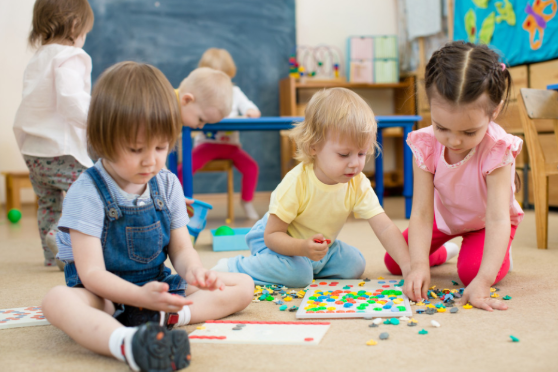
Nobody really says this out loud, but it probably should be said more. A child who moves through early childhood without ever sitting in discomfort inside a safe environment is being quietly under-prepared for everything that follows. That moment when a child wants the red bucket and finds another child already has it — that small, frustrating standoff is not an interruption to the learning. It is the learning. Emotional regulation does not arrive through explanation. It gets built through repetition of exactly these kinds of moments, over and over, with a trusted adult nearby but not immediately fixing things. Centres that rush every conflict to resolution are, without meaning to, skipping the part that matters most.
Children Teach Each Other Things Adults Cannot
An adult demonstrating patience is useful. Another child, the same age, who grabs something back without warning — that teaches patience in a way that genuinely sticks. Peer learning works differently in early childhood than most people expect. Children respond to social consequence far more acutely than they respond to gentle instruction from a carer. When a friend walks away because of something they did, that registers somewhere deep. No amount of calm redirection from an adult reaches the same place. Good educators know this and build environments where peer interaction is the engine, not a distraction from the real work.
The Room Itself Is Doing Work
Walk into a thoughtfully designed childcare space and what looks like aesthetic choice is actually deliberate. Where materials are placed. Whether children can reach them without asking permission. How much open-ended space exists compared to structured activity corners. Every one of those decisions shapes how independently children move, think and create throughout the day. At a well-run Southport childcare centre, the physical environment is treated as an active educator — one that sends children constant quiet messages about how capable and trusted they are.
Attachment to Educators Is Not a Soft Metric
Some parents feel vaguely unsettled when their child becomes strongly attached to one particular carer. That instinct is worth questioning. Secure attachment to a consistent adult is not emotional dependency — it is the actual mechanism through which children take risks, recover from setbacks and push themselves into harder territory. When staff turnover is high, that mechanism keeps getting disrupted. Children who cannot settle into a stable relationship with a carer are not just emotionally unsettled. Their development is structurally affected. The relationship is not a nice extra. It is load-bearing.
What Children Fear About School Has Nothing to Do With Maths
The children who find the transition to school hardest are almost never the ones who cannot count or recognise letters. They are the ones who have never had to manage themselves in a large group, or who fall apart when something does not go their way, or who have never learned to ask for help without it feeling like failure. A Southport childcare centre genuinely preparing children for school is not running alphabet drills. It is building the emotional scaffolding that makes every academic skill learnable when the time comes.
Boredom Has Developmental Value
Overprogrammed days do children no favours, even when they look impressive. The moment a child says they are bored and an educator holds back the urge to immediately fill that gap — something starts to happen. The capacity to generate one’s own engagement, to sit in blankness long enough for a real idea to surface, is a skill. It is also one that matters enormously later. Centres that schedule every minute are, without realising it, training children to wait for stimulation rather than create it.
Conclusion
Early childhood education tends to get spoken about in ways that make it sound soft and supplementary, when the truth is that it is structural and urgent. A trusted Southport childcare centre is where children develop the emotional range, social literacy and quiet inner confidence that will travel with them into every classroom and relationship that follows. Families who take that choice seriously, who look past the surface and ask harder questions, are the ones who tend to find somewhere that genuinely earns their trust.