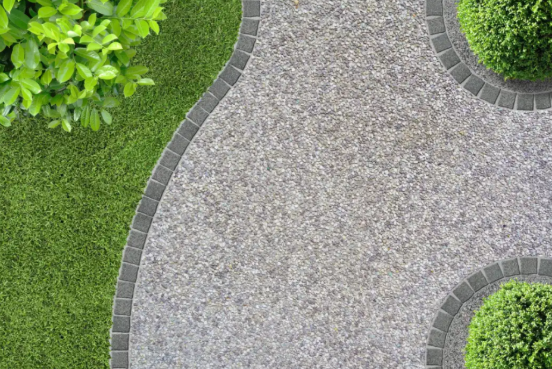
There’s a telling moment that happens on many Adelaide renovation projects. A homeowner spends weeks agonising over kitchen tiles and bathroom fittings, then points at the driveway and says, “just do something solid.” Six years later, that rushed decision is cracking down the middle and the resurfacing quote is sitting uncomfortably on the kitchen bench. Exposed aggregate concrete in Adelaide is at the centre of a smarter conversation — not because it photographs well, but because it quietly outperforms everything else over time.
Heat Does More Damage Than Expected
Adelaide doesn’t just get hot — it gets hot in sustained, unrelenting stretches that push outdoor surfaces to their limit. Plain concrete expands under heat and contracts overnight. Repeated across several summers, the stress accumulates at joins and edges until the slab starts working against itself. The stones embedded through an aggregate mix interrupt that thermal movement, distributing stress rather than letting it concentrate. It’s a structural advantage that has nothing to do with appearance, and it’s why aggregate driveways in suburbs like Burnside and Mitcham are still performing well on properties where plain concrete was replaced twice in the same period.
Slip Resistance Is Being Oversimplified
Every surface supplier mentions slip resistance. Almost none explain what creates it or why it eventually disappears. Anti-slip coatings applied to smooth concrete wear away within a few seasons, particularly in high-traffic zones. The grip on an exposed aggregate surface comes from the physical geometry of the stones — irregular edges, varied heights, natural texture — none of which wears away under foot traffic. Around pool surrounds where wet feet and running children are a daily reality, that permanence of grip is not a minor detail. It’s the difference between a surface that stays safe and one that only starts safe.
Design Flexibility Goes Deeper Than Colour Charts
Exposed aggregate concrete is often described purely in terms of stone colour and aggregate species, which tells about a quarter of the story. The depth of the reveal changes the character of the finished surface entirely. A shallow reveal produces a refined result that suits contemporary builds in areas like Glenelg North. A deeper reveal creates a texture that complements heritage streetscapes in suburbs like Prospect or Colonel Light Gardens. The aggregate species matters too — river pebbles, granite chips, and locally sourced quartzite each carry different undertones, and a choice made without considering the home’s existing palette almost always looks disconnected from the street.
Where Pavers Quietly Fail
Aggregate concrete and clay pavers are often compared as though they’re equivalent options at different price points. They aren’t. Pavers are individual units bedded in sand, meaning every heavy vehicle, every skip bin, every delivery truck rolling across the edge works to shift those units out of alignment. Exposed aggregate concrete is monolithic — it moves as one piece or not at all. For households with multiple vehicles or regular trade access, that structural difference becomes obvious within a few years.
Sealing Determines the Long-Term Result
A properly laid aggregate surface that never gets resealed will look noticeably worse within three Adelaide summers. UV exposure bleaches stone colour, the cement matrix dulls, and the surface loses the depth that made it worth choosing. What most guides skip is that resealing on a fixed calendar schedule is less effective than resealing based on observation. When water stops beading and starts soaking in, the sealer has expired. Waiting past that point means the next application works harder for a noticeably worse result.
What Buyers Actually Notice
Agents working streets in Norwood, Payneham, and St Peters consistently observe that properties with quality outdoor surfaces attract buyers who are already mentally moving in, rather than calculating remediation costs. An exposed aggregate driveway signals permanent, considered decisions — something a freshly pressure-washed plain slab simply cannot replicate.
Match the Finish to the House First
The stone colour that looks perfect on a showroom sample reads completely differently against rendered brick or timber cladding under Adelaide afternoon light. Standing at the front boundary and looking back at the house before committing to a mix is a step that prevents the most common and expensive mistakes.
Conclusion
Exposed aggregate concrete in Adelaide holds its position because it solves problems that other surfaces quietly ignore — thermal stress, permanent grip, structural load bearing, and long-term aesthetic depth. The surface itself rarely lets people down. The decisions made before installation sometimes do.