There is a gap between what a drawing specifies and what actually comes off the machine. Most manufacturers find this out at the worst possible time — during assembly, during inspection, or after something has already failed. The gap is not always dramatic. Sometimes it is barely measurable. But in precision applications, barely measurable is more than enough to cause serious problems. CNC machining services exist to close that gap, and the ones worth working with understand that closing it takes far more than running a capable machine.
Tolerances Need Process Control
A tolerance on a drawing is an intention. Whether it holds across an entire production run depends on what is happening at the process level. Temperature affects material dimensions. Tool wear drifts gradually through a batch. Fixturing that locates perfectly at the start of a shift behaves differently as components warm up and conditions shift. Shops that chase tolerances reactively — measuring a bad part and adjusting — are always playing catch-up. Those that control the process from the front produce consistent parts because the conditions creating them stay consistent.
Chatter Points Somewhere Deeper
When a machined surface shows chatter marks, the instinct is to slow the spindle or reduce the feed. Sometimes that helps. Often it does not. Chatter is rarely caused by one thing — it is the visible result of tool overhang, workpiece rigidity, spindle condition, and cutting parameters all interacting badly at once. Addressing the surface symptom without diagnosing what is actually driving it just moves the problem somewhere else. Experienced machinists work backwards from the surface finish to the real cause, not forwards from the obvious adjustment.
Datum Selection Carries Real Risk
Where a part gets measured from matters as much as what is being measured. Datum selection — choosing the reference surfaces from which all dimensions are controlled — happens early and affects everything downstream. A datum chosen for machining convenience rather than functional relevance produces parts that pass inspection but assemble poorly or perform differently than designed. In multi-component assemblies, this compounds quickly. Each part’s datum scheme needs to be compatible with the others, and that compatibility rarely gets the attention it deserves until something does not fit together the way it should.
Coolant Is Process Engineering
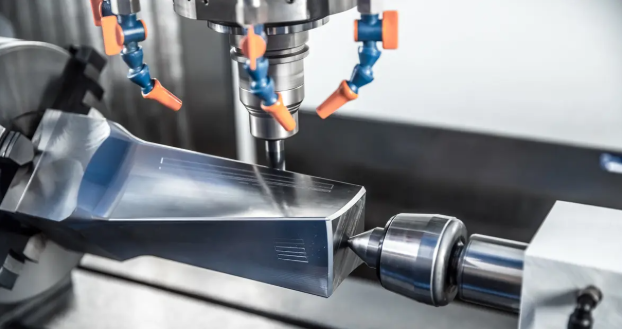
Coolant is not just temperature management. It affects chip evacuation, surface finish, tool life, and in certain materials, the condition of the machined surface itself. Stainless steel machined with inadequate coolant develops a work-hardened layer that changes how the surface behaves in service. Titanium generates localised heat that destroys tooling without the right delivery strategy. Quality CNC machining services treat coolant as a genuine process decision — direction, pressure, and chemistry all considered relative to the material and operation, not just turned on and left running.
Repositioning Errors Add Up
Every time a part moves from one setup to another, error has an opportunity to enter. The part locates slightly differently. The reference gets re-established from a surface carrying the accumulated variation of previous operations. Each individual repositioning error might be negligible on its own. Across multiple setups on a complex part, they compound into something that shows up in the final inspection and is difficult to trace back to a single cause. Reducing setup count reduces that accumulation directly.
Inspection Data Should Work Harder
Measuring parts and recording the results is not quality control. It is documentation. The real value of inspection data is what it reveals about process behaviour — which features drift, which setups introduce variation, which tools stay consistent and which do not. CNC machining services that analyse inspection results rather than simply filing them can identify trends before they produce out-of-tolerance parts. That shift from reactive checking to predictive process management changes outcomes in ways that are difficult to achieve any other way.
Thin Walls Deflect Under Load
Thin-walled components flex under cutting forces. The tool pushes against the material, the wall moves away, the machine cuts less than intended. When the tool passes, the wall springs back — leaving a feature thicker than specified and often not straight. Compensating for this requires understanding how much deflection is actually occurring and adjusting the toolpath strategy to account for it. It does not appear on the drawing. It dominates the machining conversation the moment the geometry demands it.
Conclusion
CNC machining services that genuinely deliver precision understand the machine is only one part of the equation. Process control, datum engineering, coolant strategy, inspection discipline, and a real understanding of how materials behave under cutting conditions — these are what separate reliable precision from occasional precision. Manufacturers who look past equipment specifications when choosing a machining partner, and focus instead on process understanding, consistently get better results. The best machined components are not produced by better machines alone. They come from better thinking applied at every stage of the process.