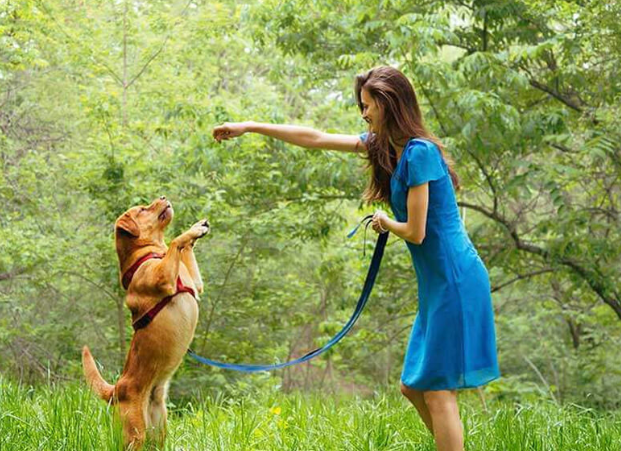
Most people walk into puppyhood thinking the hard part is the sleep deprivation. It is not. The hard part arrives months later — when the puppy has grown into a dog that pulls on lead, ignores its name around distractions, and reacts badly to other dogs on walks. The owner has no idea when things went sideways. It happened gradually, during the exact window when fixing it would have been straightforward. That is the window puppy training classes exist to catch.
The Window Closes Fast
Early puppyhood comes with a developmental period when the brain is genuinely primed to absorb social information. What a puppy encounters during this time — other dogs, unfamiliar people, different surfaces, loud noises, car trips — gets quietly filed as normal. What it misses does not simply get learned later at the same pace. The brain changes as puppies age. Things that would have been unremarkable at eight weeks become threatening at six months. Owners who wait until a problem appears are often starting from a much harder position without realising it.
Socialisation Is Widely Misunderstood
The word gets thrown around loosely and applied to almost anything involving a puppy being near other living things. But unmanaged exposure to overwhelming situations can actually produce the opposite of what owners intend — a dog that links public environments with stress rather than neutrality. Real socialisation means controlled, positive exposure at a pace the puppy can genuinely handle. Puppy training classes provide that structure, with a trainer reading the dog’s body language and adjusting before a bad experience has a chance to stick.
Reactive Dogs Are Built Slowly
This is the insight most owners receive too late. The dog that lunges at strangers, barks at visitors, and cannot settle in public almost always has a traceable history — missed socialisation, unintentional reinforcement, early experiences that nobody addressed because they seemed minor at the time. Reactivity rarely appears without a paper trail. Structured early training does not guarantee a perfect dog, but it closes off a significant number of the pathways that quietly lead there.
Trainers See What Owners Miss
Living with a puppy every day makes objectivity almost impossible. Owners stop noticing things that have become routine. The low growl that gets laughed off. The stiff posture before a reaction that gets misread as excitement. The avoidance that looks like stubbornness. Puppy training classes put an experienced observer in the room who carries no emotional attachment to the dog. A trainer catches the early signals that, left alone, become ingrained patterns that are genuinely harder to shift later on.
Home Practice Has Real Limits
A puppy that sits reliably in the kitchen has learned to sit in the kitchen. That is a different skill entirely from sitting when another dog is nearby, when children are running past, or when something exciting is happening across the oval. Generalisation does not happen on its own — it has to be trained deliberately across varied environments and distraction levels. Class builds that in from the start rather than treating it as something to figure out later.
Mixed Signals Cause Most Problems
Training breakdowns at home are rarely about the dog. They are about people in the same household sending contradictory information without noticing. One person allows jumping because the puppy is small and it is endearing. Another uses a completely different word for the same behaviour. The puppy is not being difficult — it is responding logically to an inconsistent set of instructions. A shared class gives households one approach, and that consistency usually does more practical good than any single technique taught during the session.
Steadiness Is the Real Goal
The dogs that move most comfortably through the world are not necessarily the most obedient. They are the most settled. A puppy guided through uncertainty with patience and consistency develops a baseline steadiness that makes everyday life genuinely easier — vet visits, off-lead parks, busy streets, unfamiliar people. None of it becomes a crisis. That quality is built early or it is rebuilt later with considerably more effort.
Conclusion
The behaviours that make a dog hard to live with rarely announce themselves during puppyhood. They develop quietly, during the months when the right guidance would have cost the least effort. Puppy training classes are not about producing a dog that performs on command — they are about building a dog that handles real life without falling apart. Starting early is not overcautious. It is simply the most sensible path toward a dog that is genuinely enjoyable to live with long term.